Wedding Traditions Scotland: A Wee Guide to Old & Modern Scottish Wedding Traditions
A wee guide to Scottish wedding traditions
Here at Wee Wild Weddings we are all about making your day your own. You do you. That doesn’t mean getting rid of all traditions though. No, it just means including the traditions that mean something to you or, quite simply, the traditions that you think sound pretty cool.
When it comes to Scottish wedding traditions there are a lot to choose from. A lot. So here’s a handy wee guide to help you. And because Humanist ceremonies are legally recognised in Scotland, you’ve got complete freedom to include any of these traditions in your Humanist wedding ceremony with us.
Tartan - A Classic Scottish Wedding Tradition
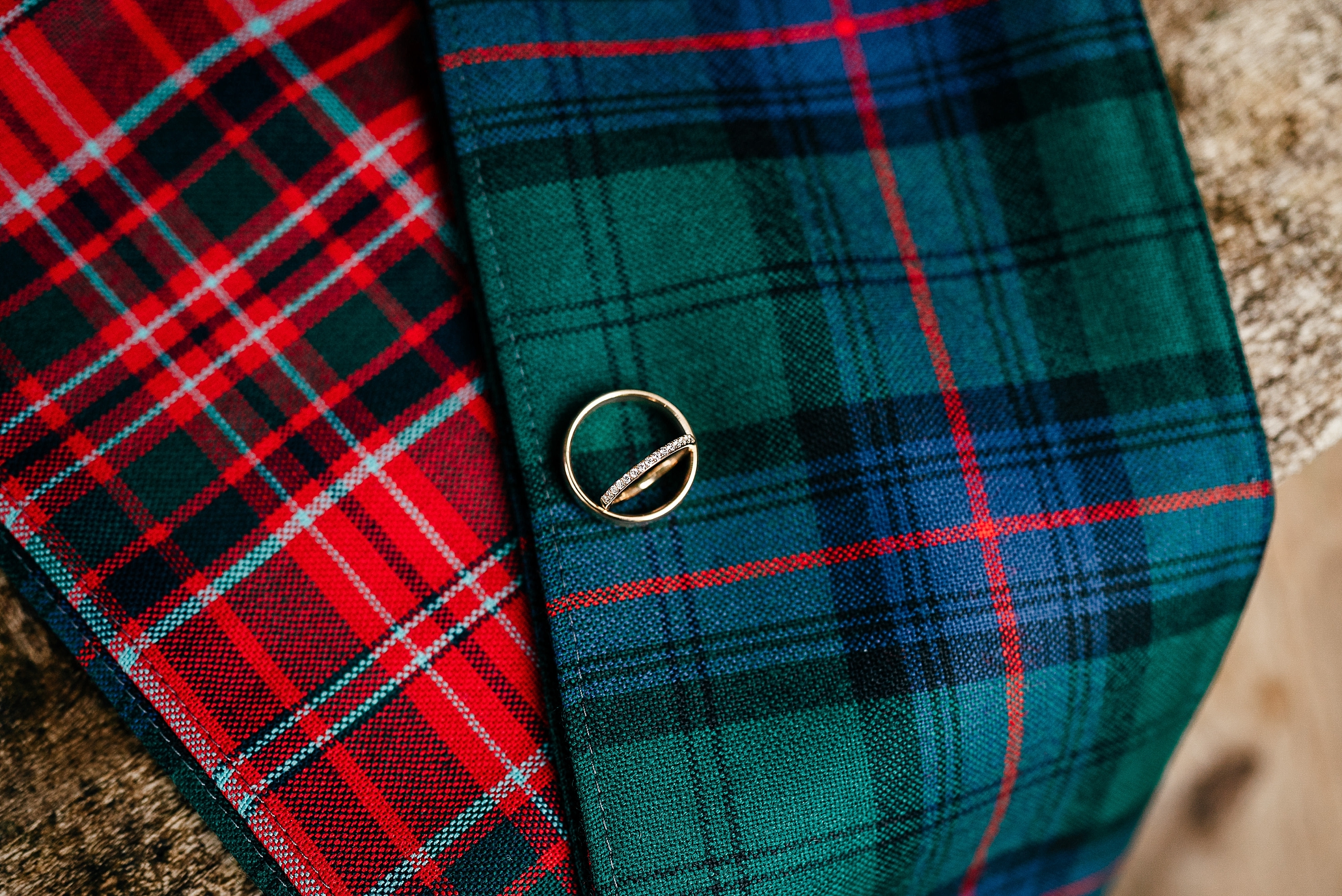
Let’s start with tartan. You can’t get more visually Scottish than some colourful tartan!
People typically wear a “family tartan”. Don’t worry if you’re not sure which is yours, it’s easy to trace. Even if you don’t have a Scottish surname you’ll be able to go back generations and find one. There are lots of online resources to help you. Here’s one for starters.
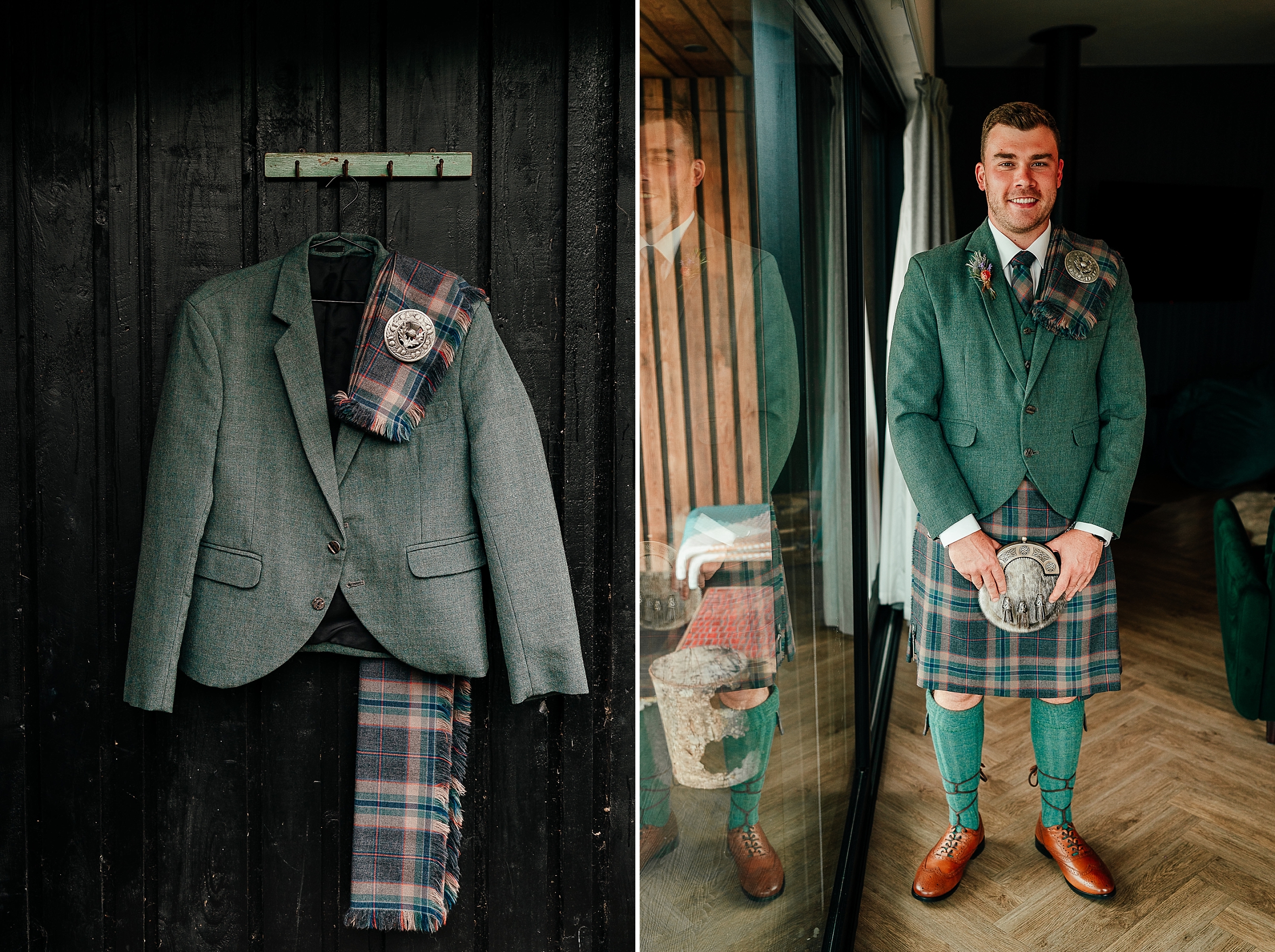
It has to be said, us Scots love it when people wear kilts, whether you’re a proud Scot or just getting married here. If you fancy wearing one, go for it! The WWW team are very good at getting people into their kilts too so don’t worry if you don’t know what you’re doing. We’ll be on hand to help.
The traditional look – kilt, jacket, sgian-dubh (pronounced skeean doo – the knife that sits inside the sock) and sporran – has been around for centuries but don’t worry if that’s not for you. The good old tartan trews are making a long-overdue comeback. Or why not think about wearing a tartan shawl, that bonus extra layer is often welcomed in our Scottish climate!
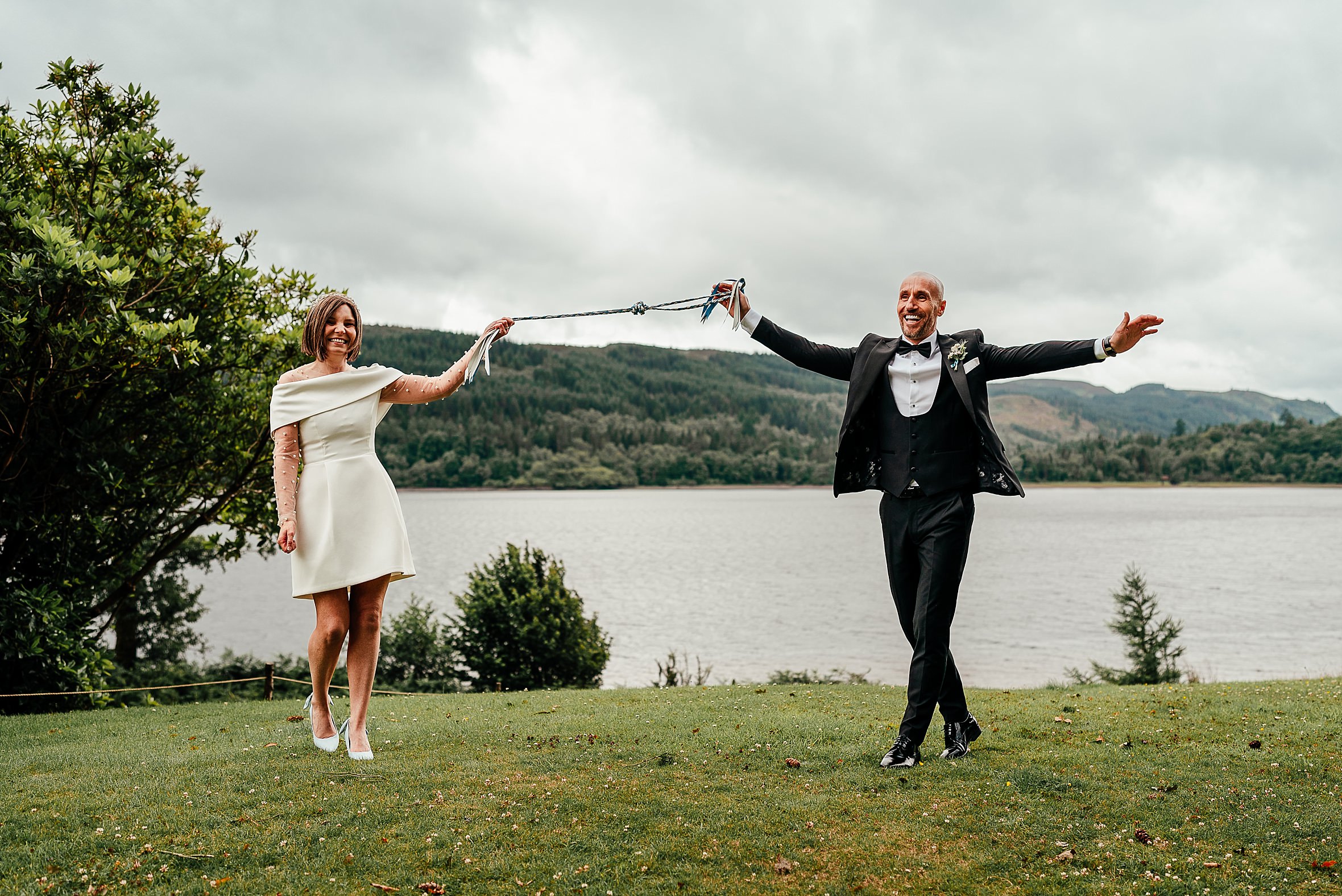
Handfasting - “Tying the knot”
This wee phrase is often used when talking about marriage, but did you know it’s rooted in an ancient Celtic tradition?
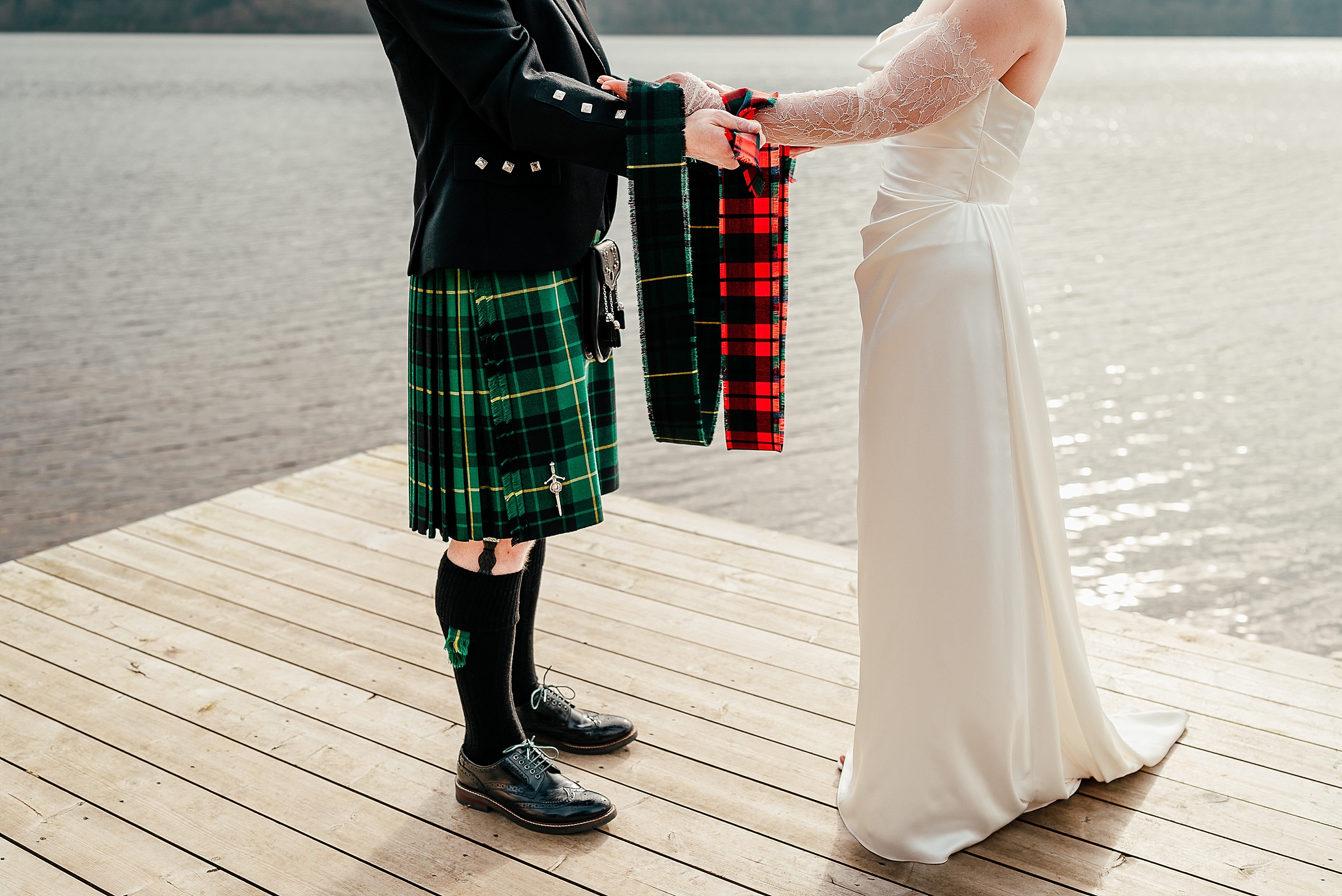
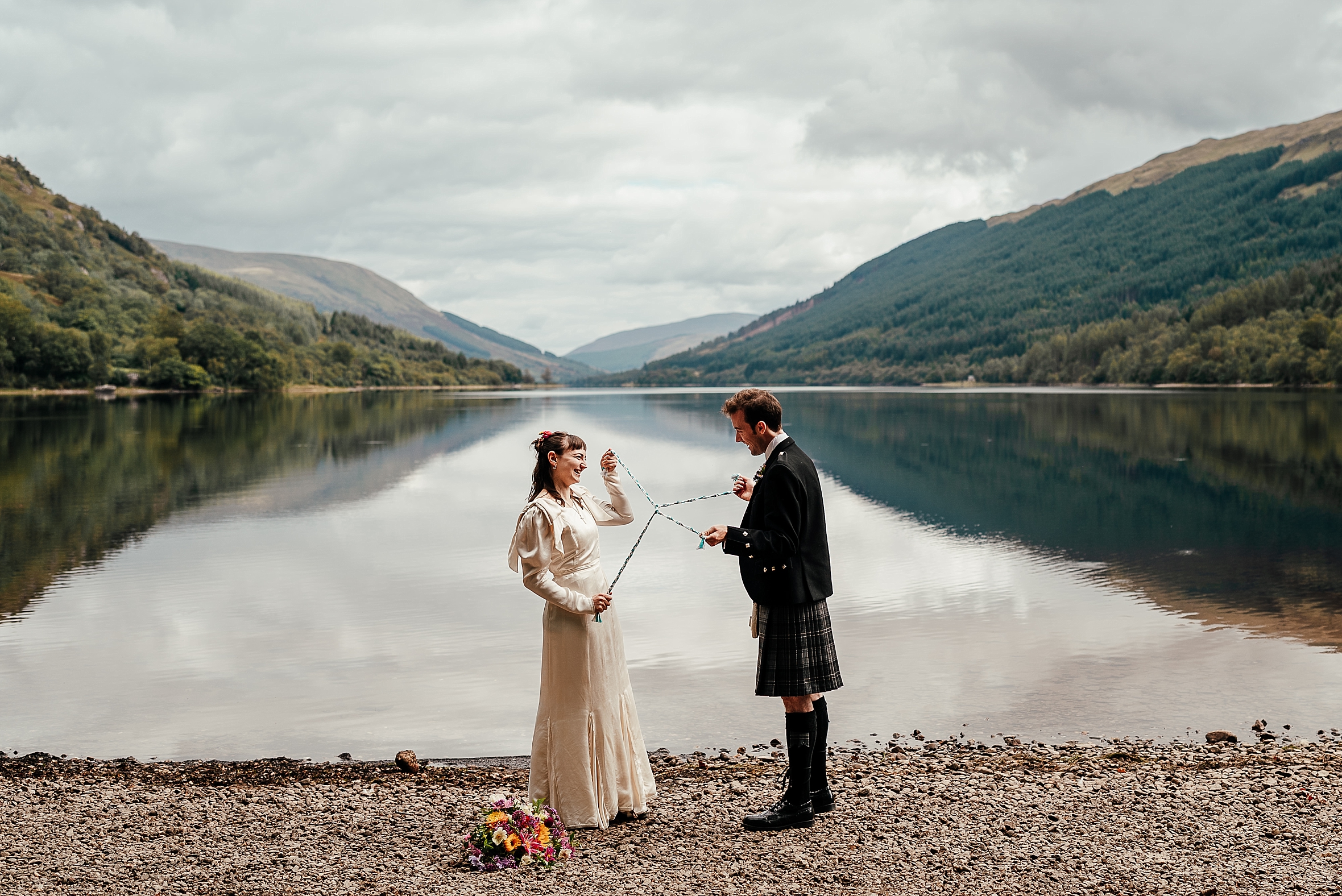
Handfasting is super popular in Humanist ceremonies. The marrying couple provides a strip or two of cloth. Traditionally that would be clan tartan but anything can be used – brightly coloured ribbons, ties from grandparents, knotted cords in your wedding colours… We even had one adventurous bride rip off a bit of her dress mid-ceremony!
The celebrant will place the couple’s hands together and bind them using the fabrics. Alternatively you could ask family members or friends to bind your hands together. You can even pour some water over it from the nearest river or loch to bind it tighter.
Once the fabric is entwined around them, the couple pull their hands away and the two separate fabrics are, as if by magic, joined tightly together in a knot. It’s a bit of real life wizardry!
Handfasting always looks amazing visually, makes for great photos and the bound fabrics are a lovely wedding keepsake.
Quaich - mid wedding whisky!
Another increasingly popular tradition. The quaich (what a word!) is also known as a ‘Loving Cup’.
When saying quaich, think quake with a soft ‘ch’. We’ve heard it pronounced all manner of ways, including, of course, quiche.
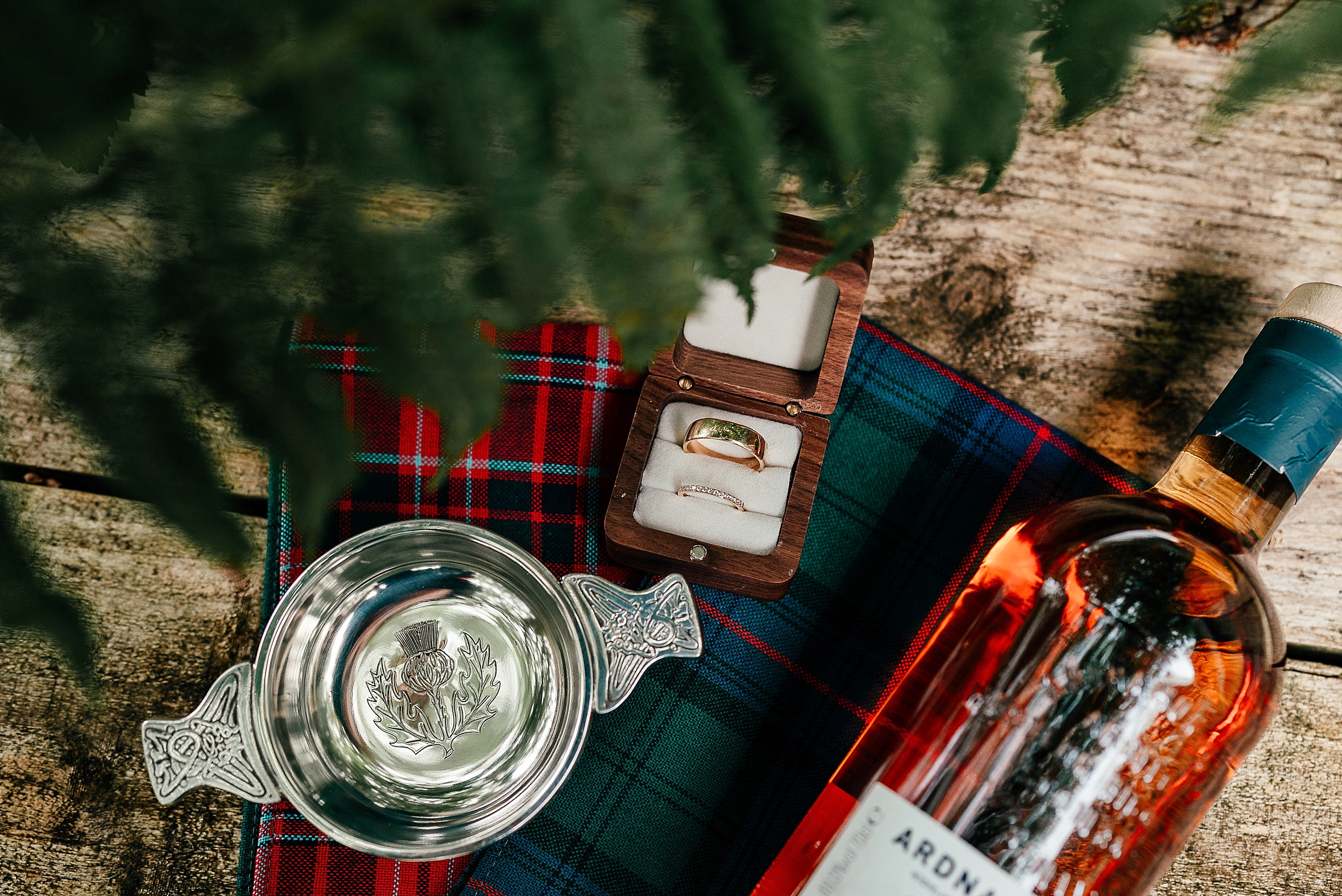
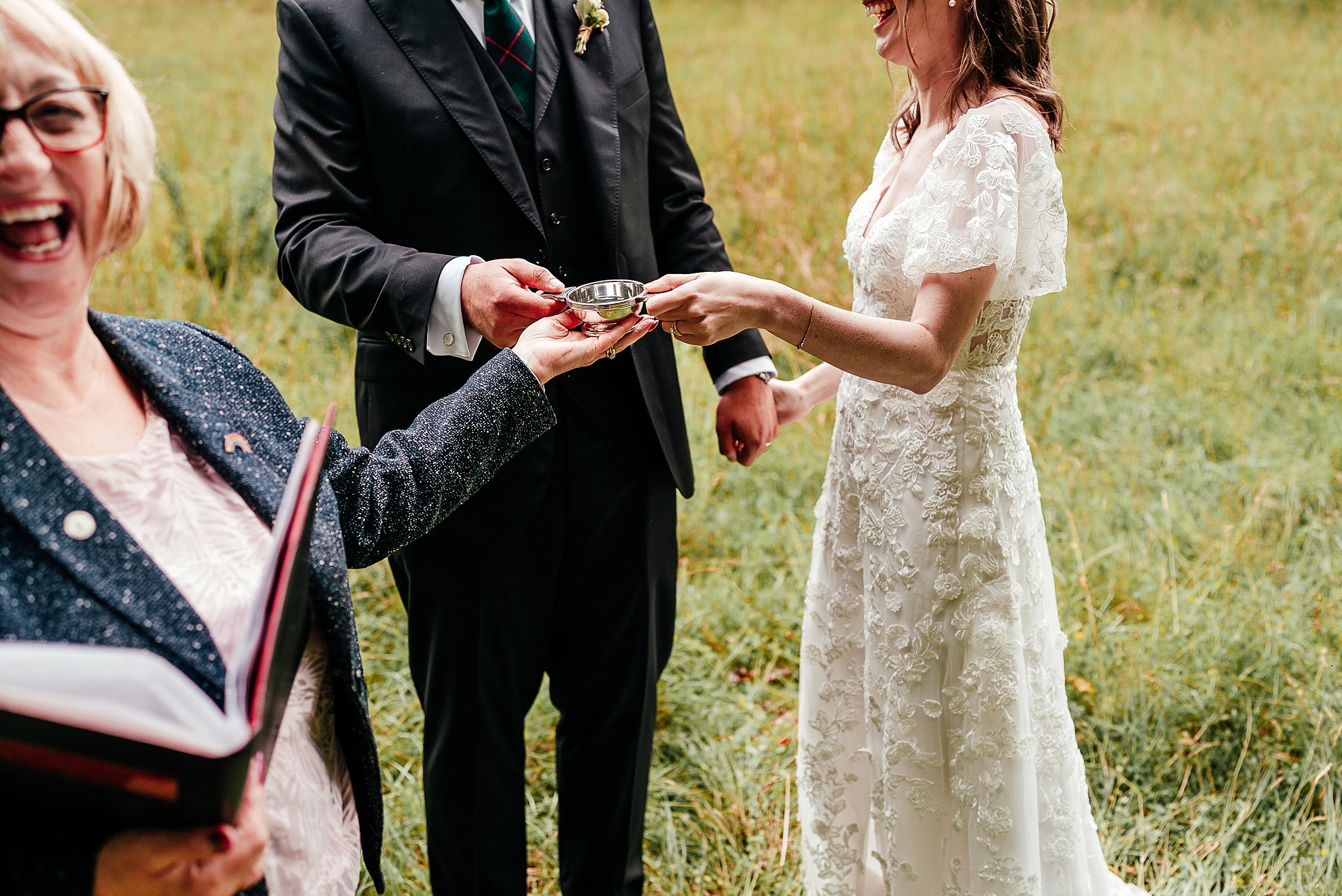
The quaich is a two-handled cup, normally made out of silver, pewter or wood. It’s typically filled with whisky then shared between the couple once they’ve said their vows.
This is another ancient Scottish marriage ritual. Back in the days when two clans would be joined together by marriage. Clan leaders had to use both hands to drink from the cup, symbolising trust in each other. Afterall, if both your hands are holding the quaich you can’t be wielding a weapon as well!
Some couples like to buy their own quaich and get it engraved. Don’t worry if that’s not for you though, your celebrant should be able to bring one along. Whisky isn’t mandatory either. We’ve seen quaichs filled with gin, Irn Bru (can’t get more Scottish) or two drinks mixed together symbolising the two of you becoming one.
Probably best to test that last one pre-ceremony though. You could end up with an interesting combo!
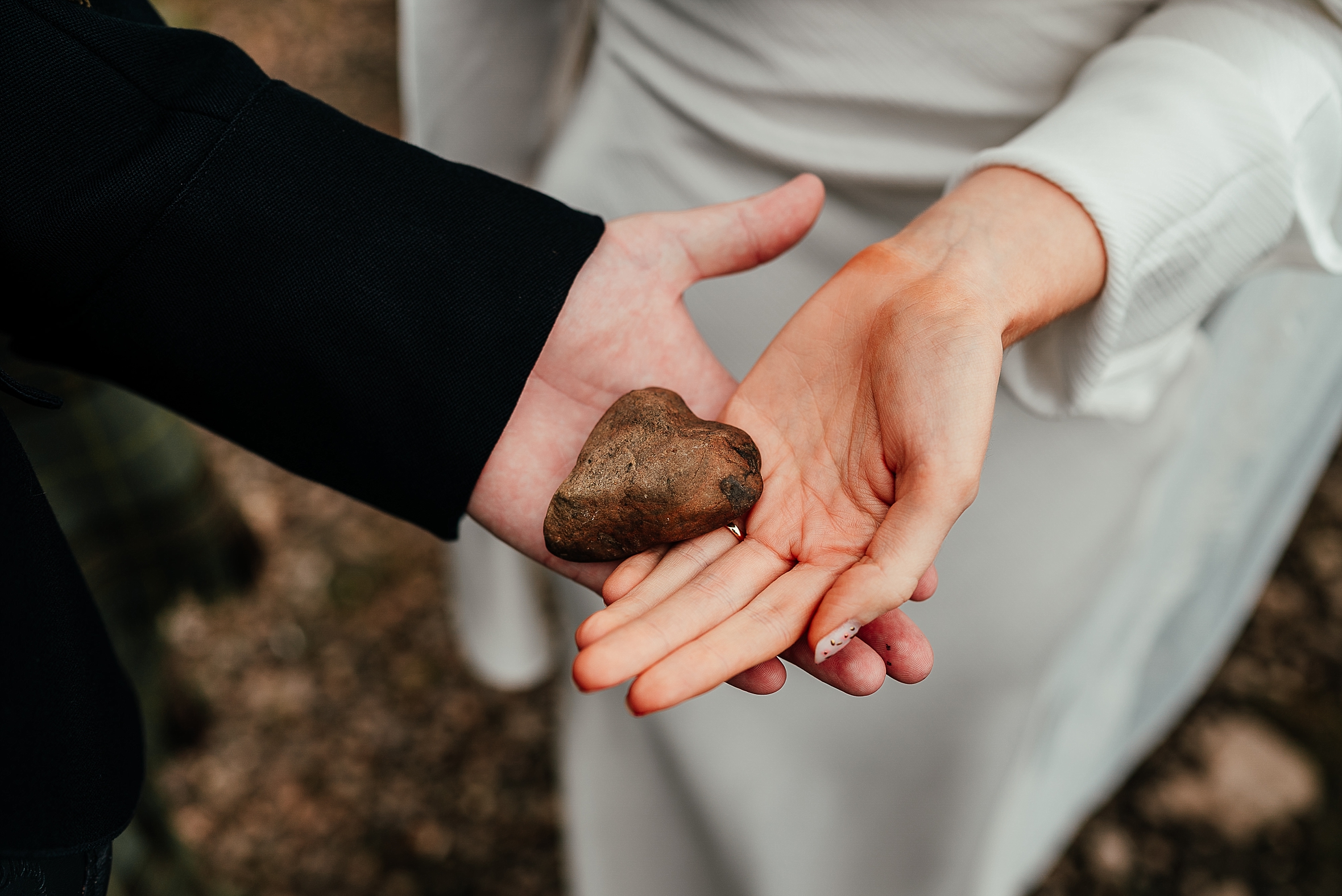
Oathing stone - An Ancient Celtic Wedding Tradition
This is a wee tradition that we’re seeing more and more in Humanist ceremonies.
Ever heard of the phrase “set in stone”? Well, this is where that comes from. Ancient Celts used stones as a physical representation of a solemn promise and a connection to their ancestors and the land. An oath given near a stone (or water) is considered more binding.
In a wedding ceremony the couple clasp hands over an oathing stone, as they say their vows. The stone is symbolic of the land, of the wisdom of past generations. Holding it whilst saying wedding vows is a way of setting those words in stone.
You can buy oathing stones and get them engraved with your names and wedding date, or some couples like to choose a stone from a place that has a special meaning to them.
A nice twist is to pass the oathing stone around guests, allowing them to “warm” the stone and make any well wishes before it is passed back to the couple.
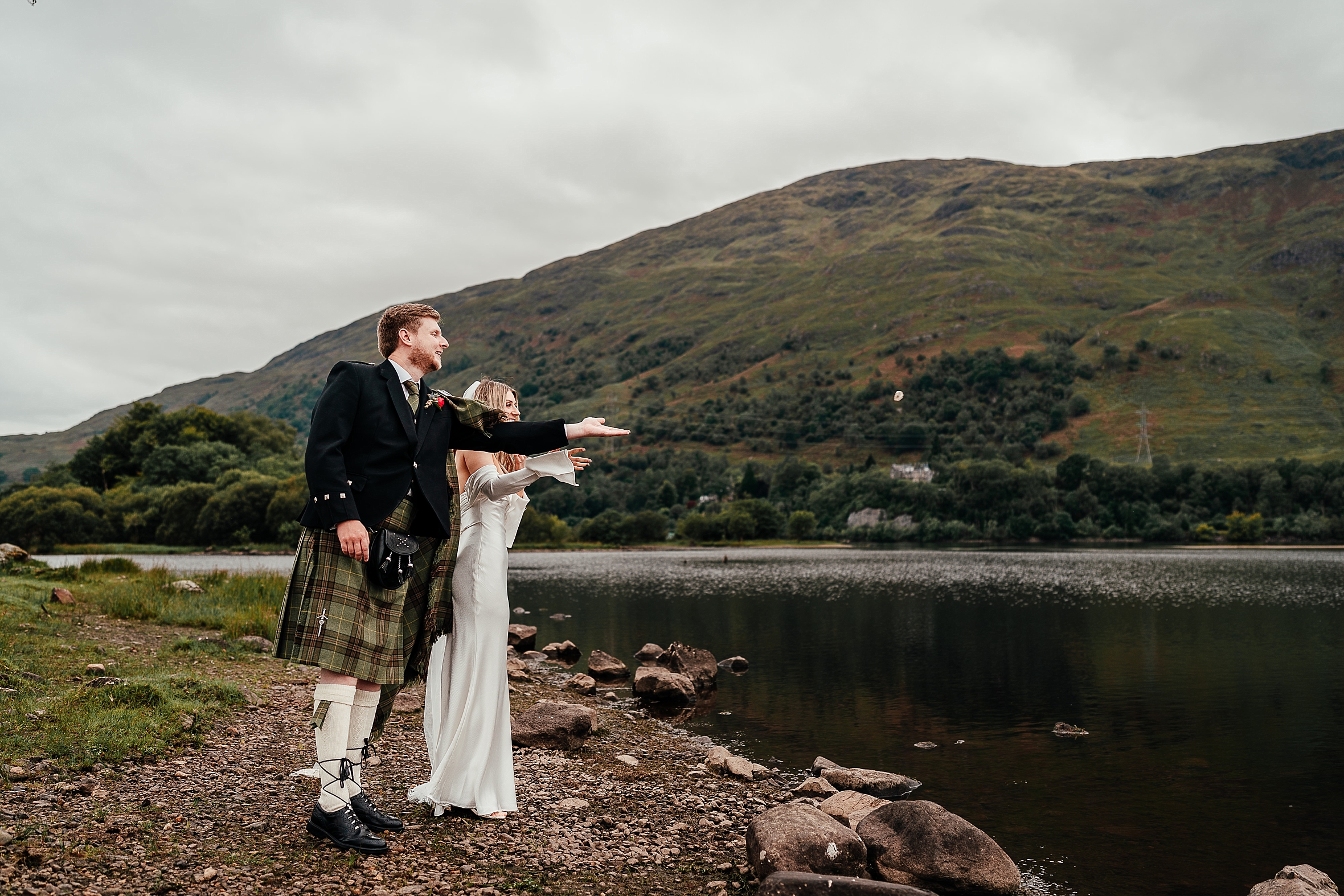
In Celtic weddings of the past, the stone was returned to the elements – either by placing it upon a mountain or stone cairn or tossing it into a loch or river. We’ve seen couples say their vows holding an oathing stone each, returning one to the land by throwing it into a loch and keeping the other. Alternatively you could keep your oathing stone as a beautiful keepsake from your day.
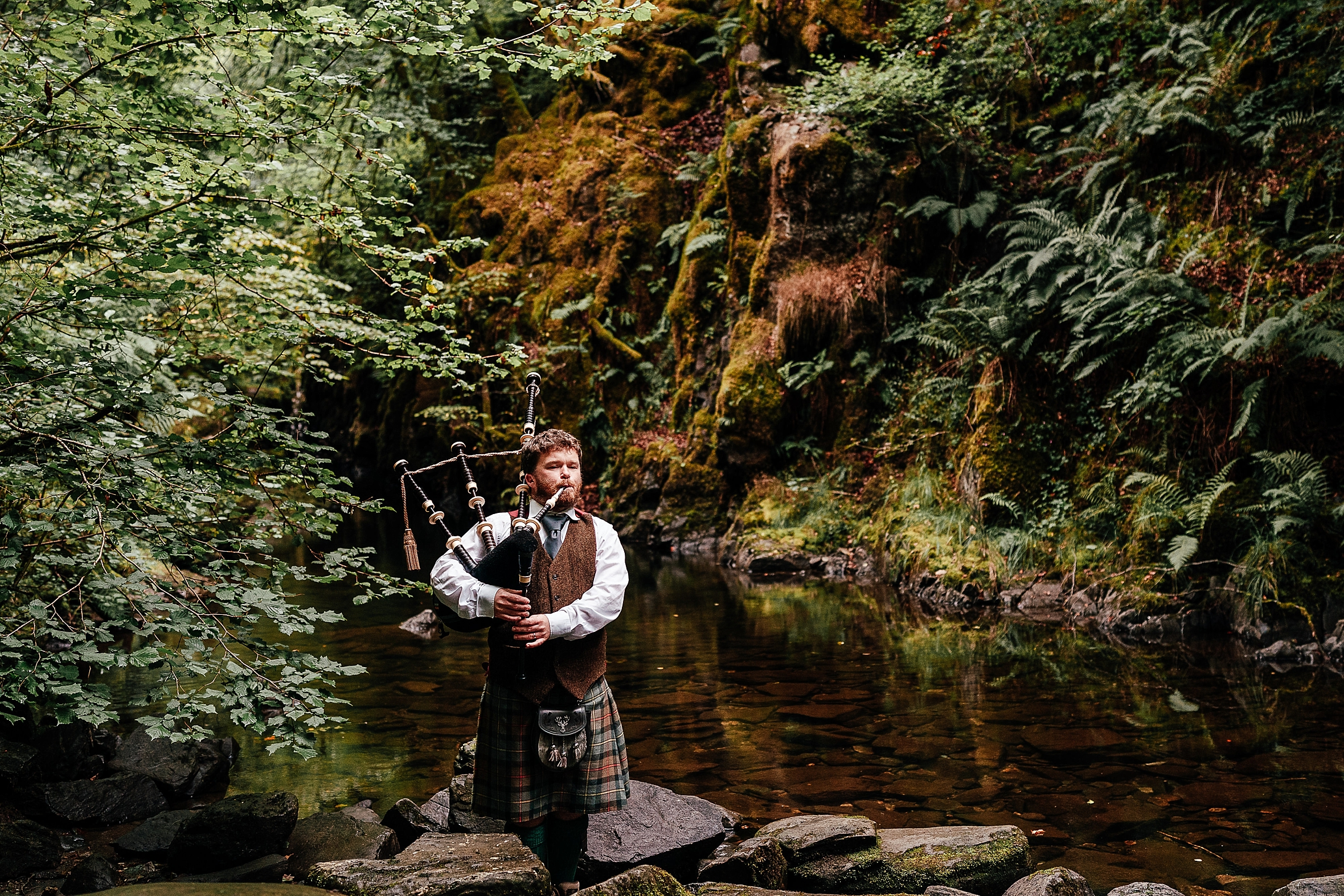
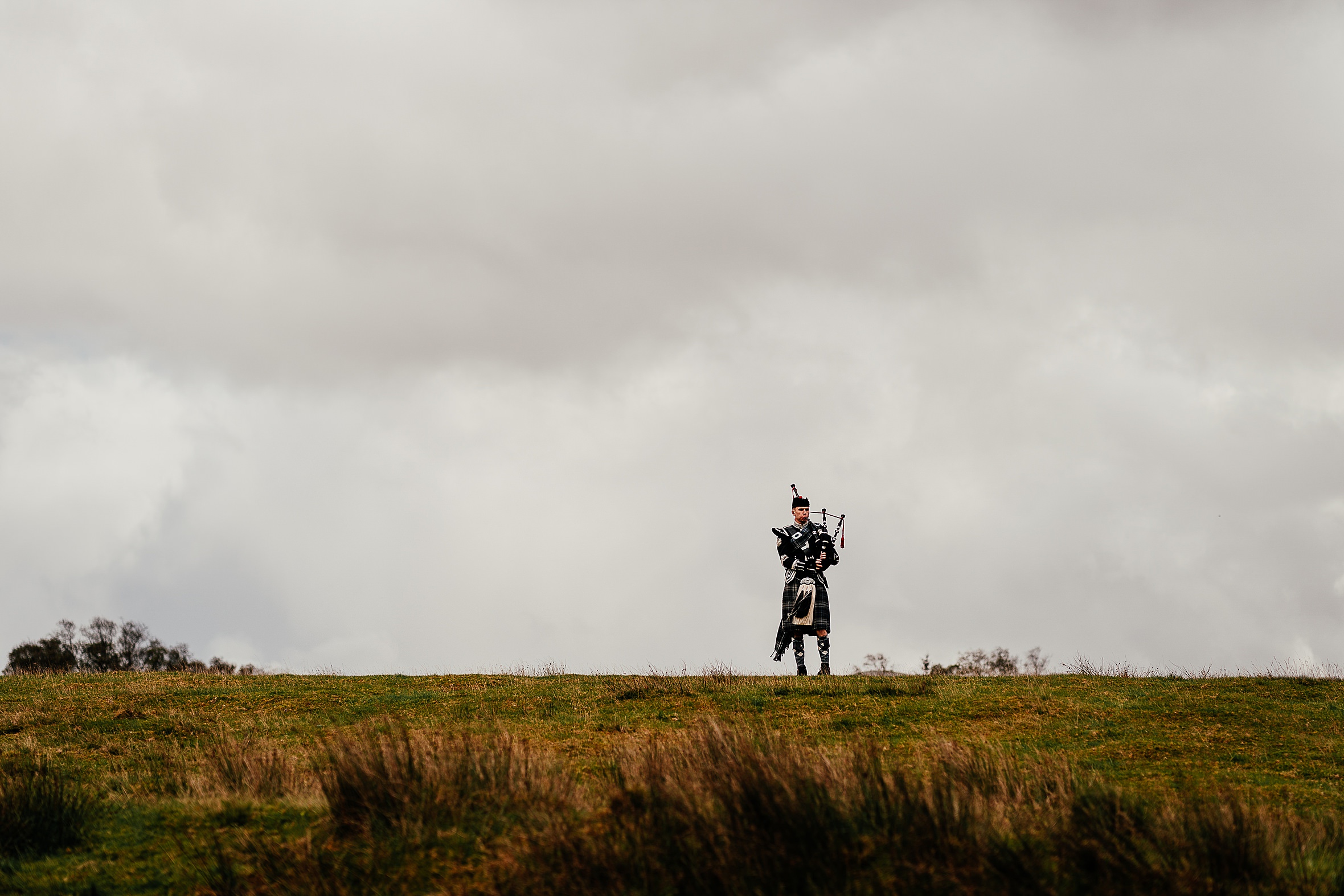
The Wedding Piper - traditional scottish music
There is nothing like the sound of the pipes echoing through a glen. Gives us goosebumps every time, it’s so atmospheric. That’ll be why a piper is one of the most loved Scottish wedding traditions.
Being piped into a wedding is also considered to be lucky. The sound of the bagpipes acts as a magical protector, chasing away any evil spirits that may be lurking. Very Harry Potter…
Couples then toast the piper, sharing a wee dram of whisky is the traditional way to pay the piper and locks in the good luck, ensuring their protection. Sorted!
Please get a good piper though, it makes all the difference! Luckily we know all the best ones…

Hopefully our handy wee guide to Scottish traditions has given you something to think about. Remember these traditions may not be for everyone and that’s cool. If something isn’t for you then don’t do it. Or take the parts that you like and make it your own.
Your day, your way.
If you want to see some Scottish traditions in action head on over to our blog to see how other Wee Wild couples have added them to their day.